Showing posts with label Interviews. Show all posts

Monday, February 4, 2013

Juan’s Double Eyelid Piercing

juan-title


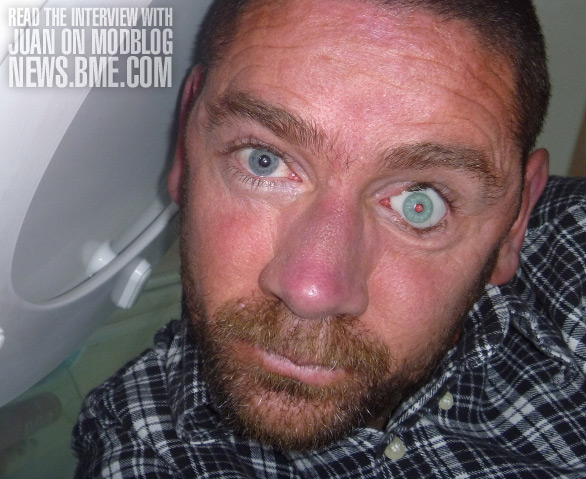
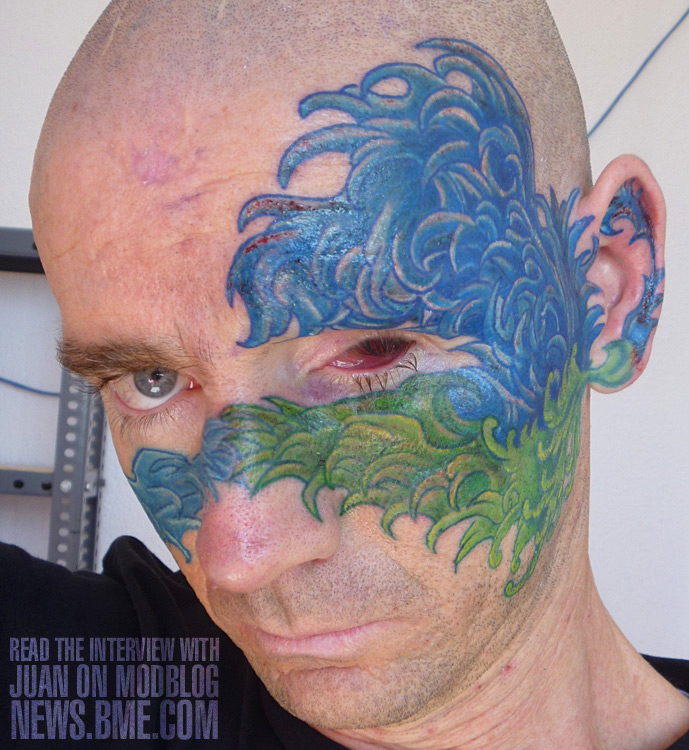
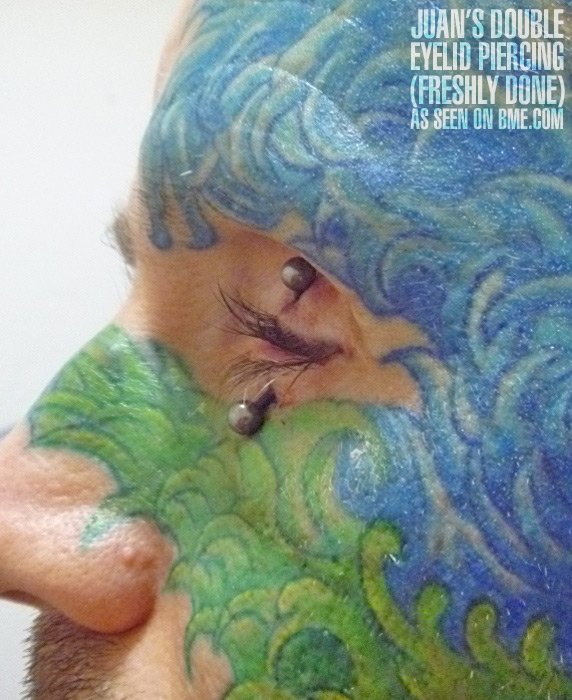
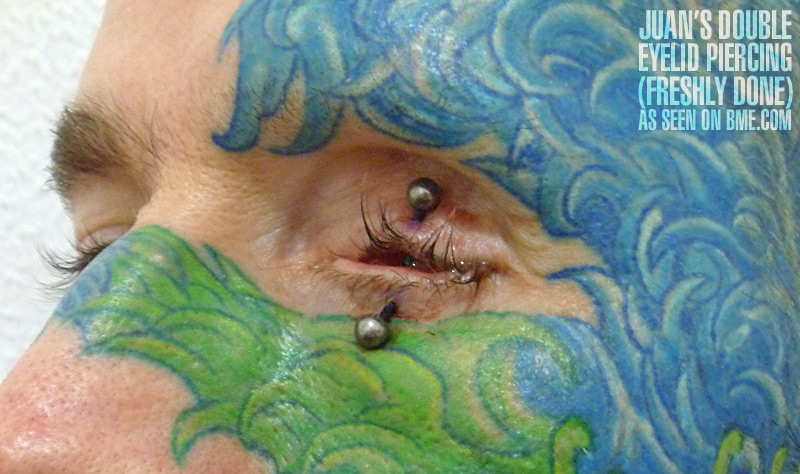
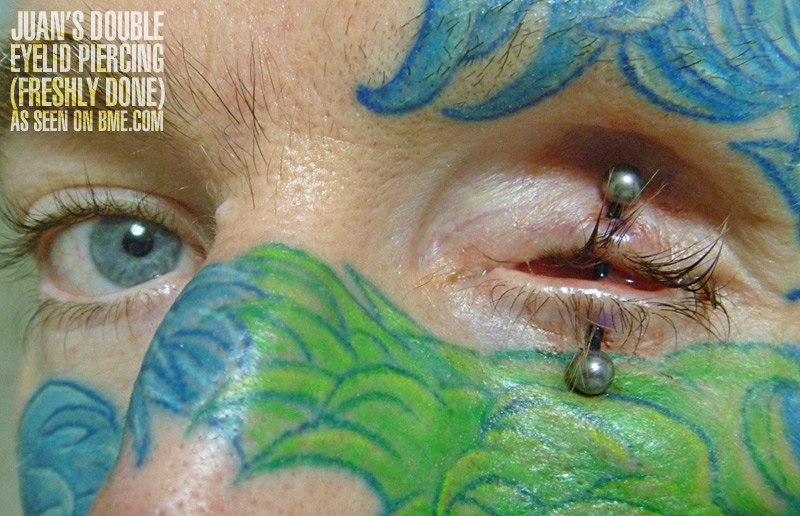
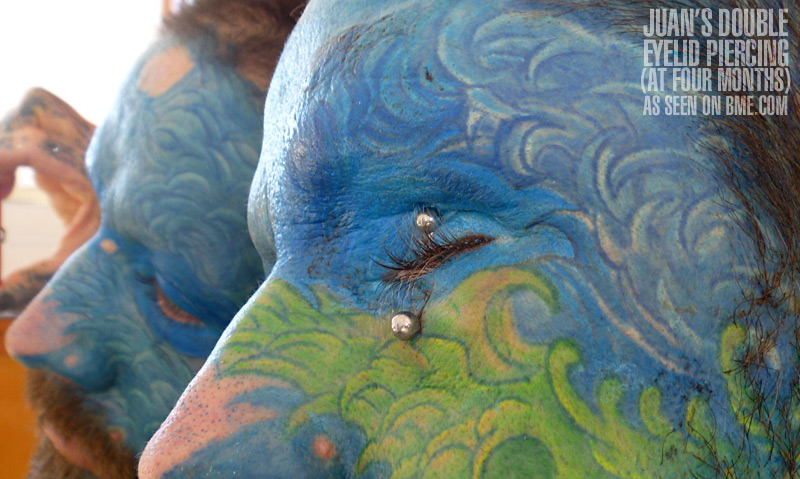
Eyelid piercings have wowed people ever since I first featured them on BME. Although they’ve shown themselves to be safe and viable when properly placed on a person with appropriately shaped anatomy, they remain one of the rarest piercings. Spanish pacifist Juan Carlos has a variation on it that is perhaps the rarest of them all — a single bar connecting the top and bottom lids, almost like an industrial for the eye. The reason this piercing is so rare is that in order to wear such a piercing permanently, it requires a very unique anatomy — the lack on an eye. As the first person to get this, Juan claims the “right of naming”, and calls this the “Tuerto piercing”, or “Eye piercing”, as it replaces the eye. I had a chance to chat briefly to Juan about his remarkable piercing and other mods, including his striking full-face tattoo.


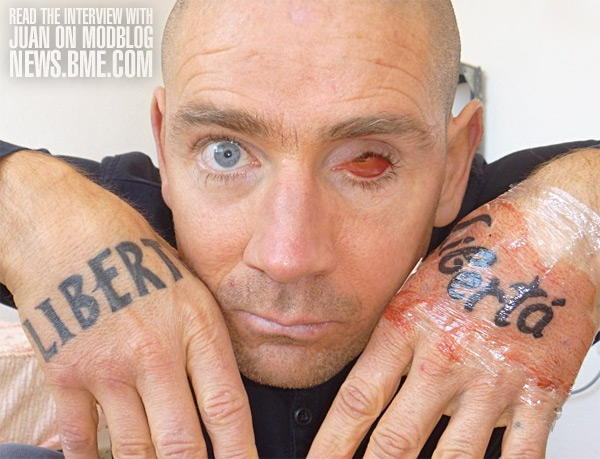
When Juan was nineteen, he was required to serve time in the Spanish military, as all citizens were required to at the time — this happened almost twelve years before the government would finally abolish the requirement. Juan went on to join the elite Spanish Green Berets, but wasn’t comfortable with aspects of their behavior once he got to see it first-hand. He felt like he couldn’t breathe. The abuse ran contrary to his ethics — he has “Libertá” tattooed on himself three times — and knew he couldn’t live with himself if he became part of this. It was either figure out a way to get out of the military or commit suicide. Not wanting to die, on January 28, 1990 Juan took a needle and punctured his own left eye — a process that he describes as not particularly painful, but just a sensation of pressure. This wound became infected, resulting in the loss of the eye — and more importantly, a psychiatric discharge from the military.


As with most people who lose an eye, Juan initially wore an artificial glass eye, an eye that he came to hate. He saw it as “a dirty mask” that he was required to wear to fit in, and that it “symbolized the triumph of ‘handsome and decent’ over the ‘rebels and libertarians’.” In addition, he needed to wear it all the time to maintain the eye basin, and it was uncomfortable at the best of times, and torturous if there was a scratch — “shit, more shit, as always.”


juan-other-1t juan-other-2t juan-other-3t
Left to right: 1. A photo of Juan before getting either his facial tattoos or unusual piercing, while wearing his uncomfortable glass eye. 2. Two of Juan’s three “Libertá” tattoos. 3. Early in Juan’s tattoo process, with his false eye removed.


So he rejected the false eye. He found that not wearing the artificial eye, though freeing, came with problems of its own — the underlying tissue changed in shape, thereby altering the angles of his eyelashes. The top lashes would fold under the bottom lid, which was extremely uncomfortable, so he started looking for something that would both solve this problem and symbolize his sense of personal freedom and autonomy — thus this unique eyelid-to-eyelid piercing. He clarifies, “my piercing, in principle, was not done for aesthetic reasons. I do like it — this piercing is one of the most beautiful and important decisions I’ve made in my life — but it is a device with a function.”


The piercing itself was done by Montse Manzorro, who pierces and tattoos at Tarambana Tattoo in El Puerto de Santa María, a coastal city in the southwest of Spain. She had been piercing for years, but like most artists, had never done an eyelid. At first she refused, but he replied with a threat experienced piercers have heard oh-so-often: “If you don’t do this for me, I’ll go to the newbie down the street, and if they won’t do it, I’ll do it myself.”


So Montse considered the matter, called a doctor friend who told her it was no big deal, and agreed to do it. Juan describes it as quite painful to have done, but not a big deal beyond that. He figures that the initial healing took about a month, and he’s had the piercing for about four months now (it was done October 10, 2012). Juan says the piercing is very comfortable — much more comfortable than the artificial glass eye was. So far the piercing has been a success both in terms of function and aesthetics, with Juan explaining, “I am very happy and I feel freer than ever. Nobody will tell me now what I should wear or not wear. My life is my business and mine alone.”


juan-fresh-1t juan-fresh-2t juan-fresh-3t
Above: Immediately after having the “eyelid industrial” piercing done.


I asked Juan how others in Spain reacted to him and he laughed — “In Spain? I do not exist! It’s dead, this country is dead — we need to ban bullfighting. The people are aggressive animals, but they do not want blood on their hands. My piercing goes mostly unnoticed due to my facial tattoo — that is, people tend to look away from the color, so they don’t have a chance to see the piercing. Young people though — and some old pimps — love it and appreciate how unique it is.”


I should add that Montse is also Juan’s tattoo artist, a tattoo adventure that is still in progress. A skin condition that Juan has asked me not to discuss in detail is deeply linked to his tattooing — first, because it means that the tattooing has at times been slow going and there are areas they can’t work on, but also because it keeps him out of the sun, restricting his ability to go to the beach (it’s just not the same at night). This is a great loss he says, “because I love the sun, my mother Sun, my favorite star, the love of my life. I am a child of the sun, always happy in its light.” Like many sun lovers, the beach was a big part of it, “I used to go to the beach in winter, and I was bathing in the sea.”


Losing the beach was heart-breaking — “I’m a baby without its preferred toy, it’s oldest toy”. Making up for the loss of the literal reality he’s moved the beach to his face — “The tattoo helps me to live, you know this, Shannon, you’ve heard it a thousand times. My facial tattoo represents the sea, the beach that I lost, the beach that I dream of most every day.”


Juan greatly enjoys corresponding with others around the world about body modification. Contact him via email at juancarlosarnizsanz@gmail.com
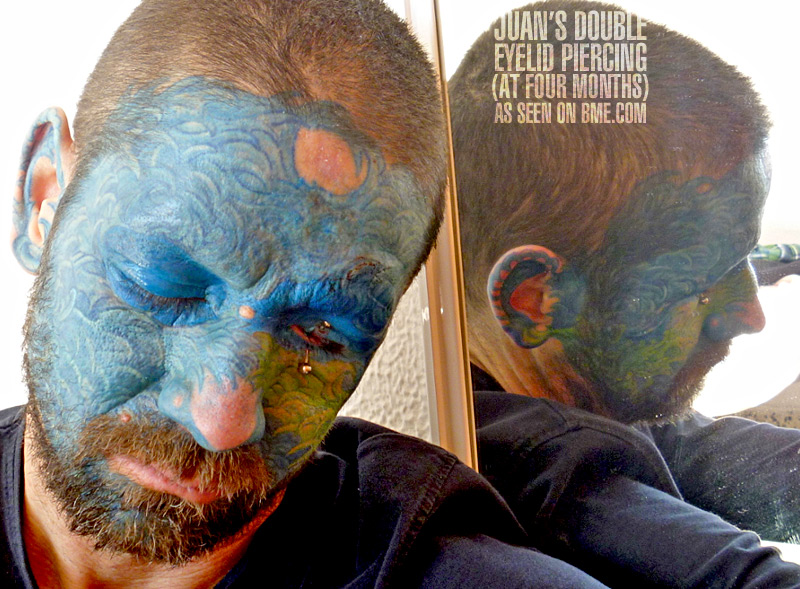
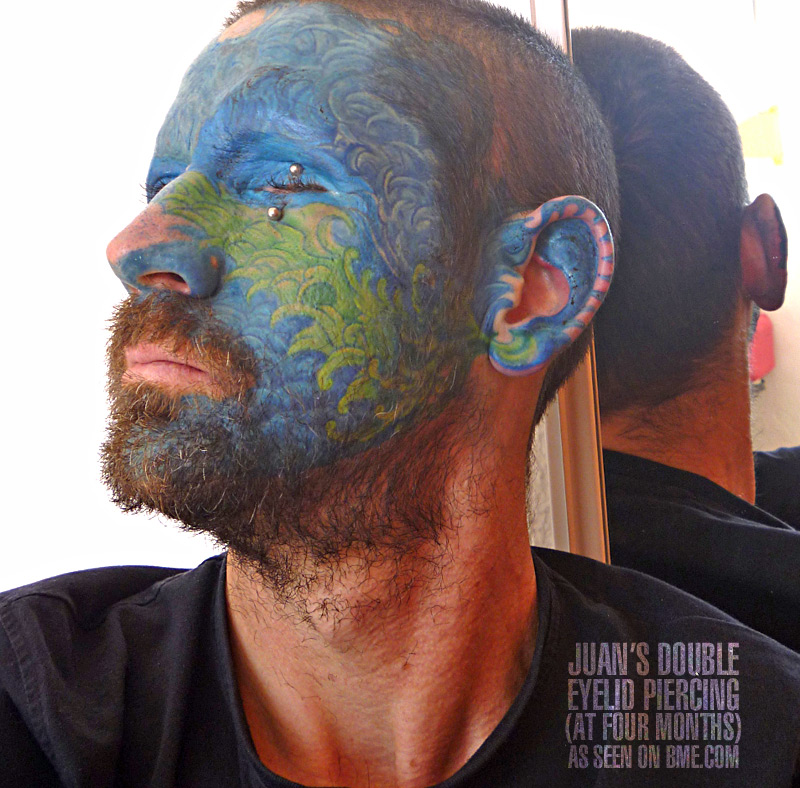
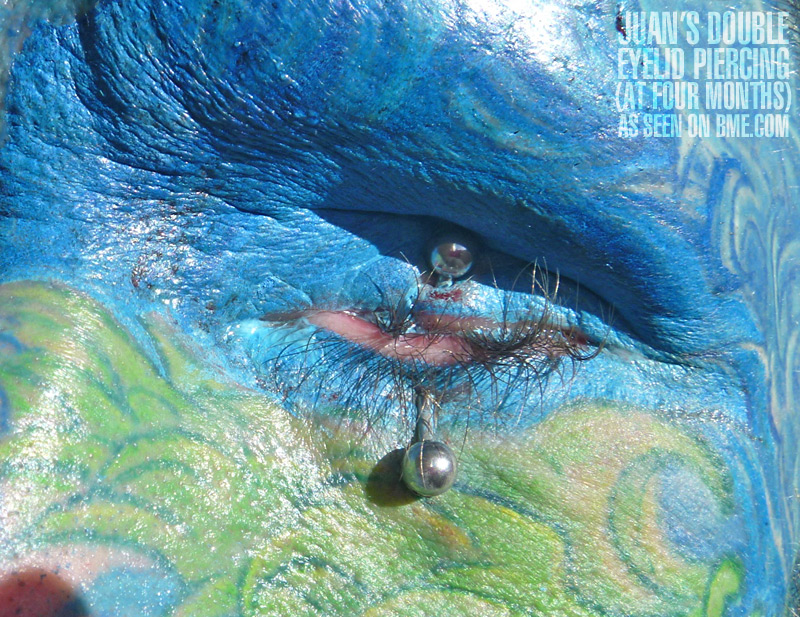

juan-now-1t juan-now-2t


juan-now-3t juan-now-4t
Above: Juan’s piercing about four months old, with more blue tattooing added, including both top and bottom, left and right eyelids.

Thursday, January 31, 2013

Cammy Stewart Interview

cammy-tattoo-title


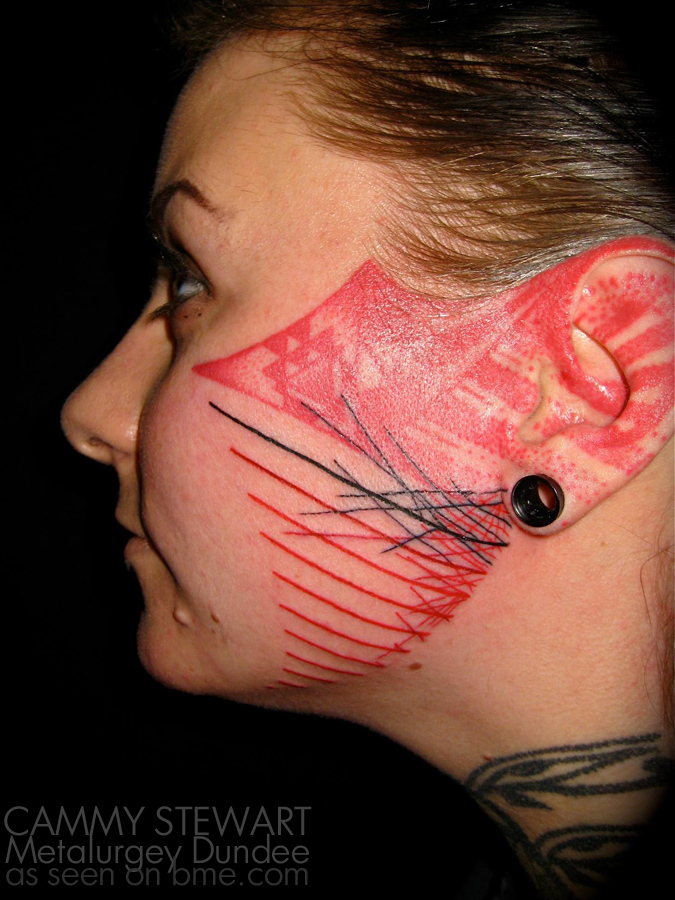
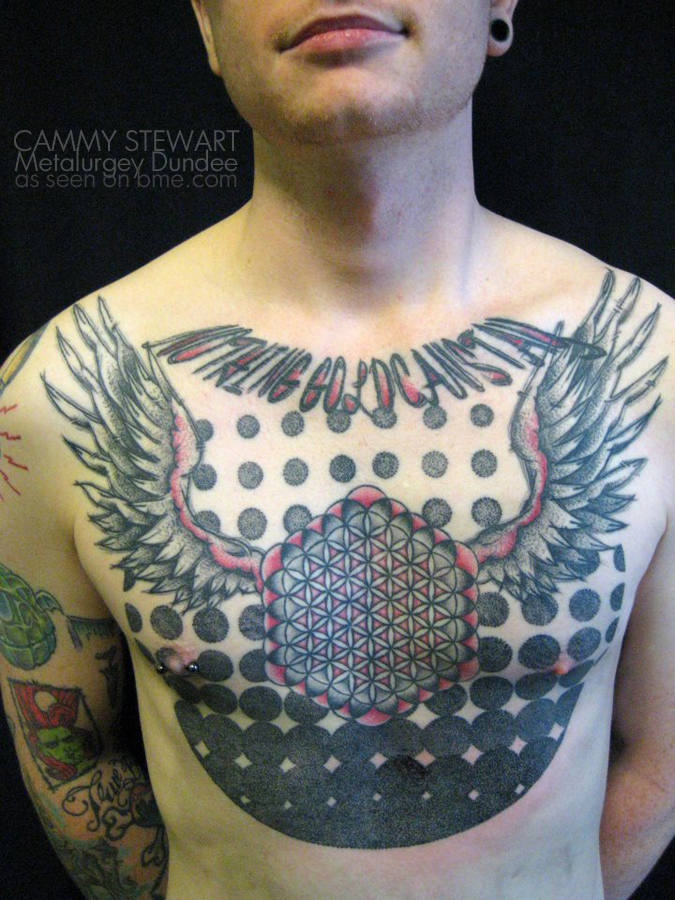
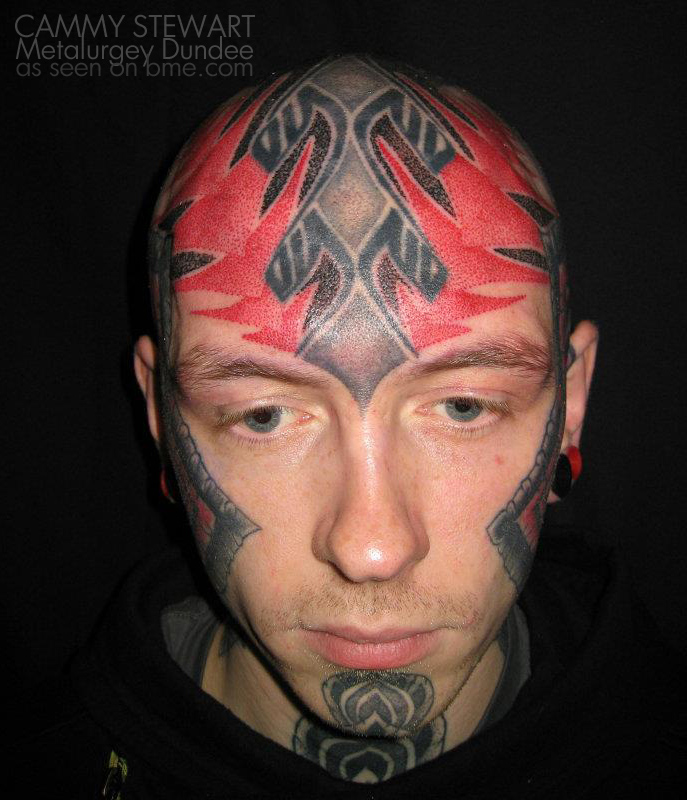
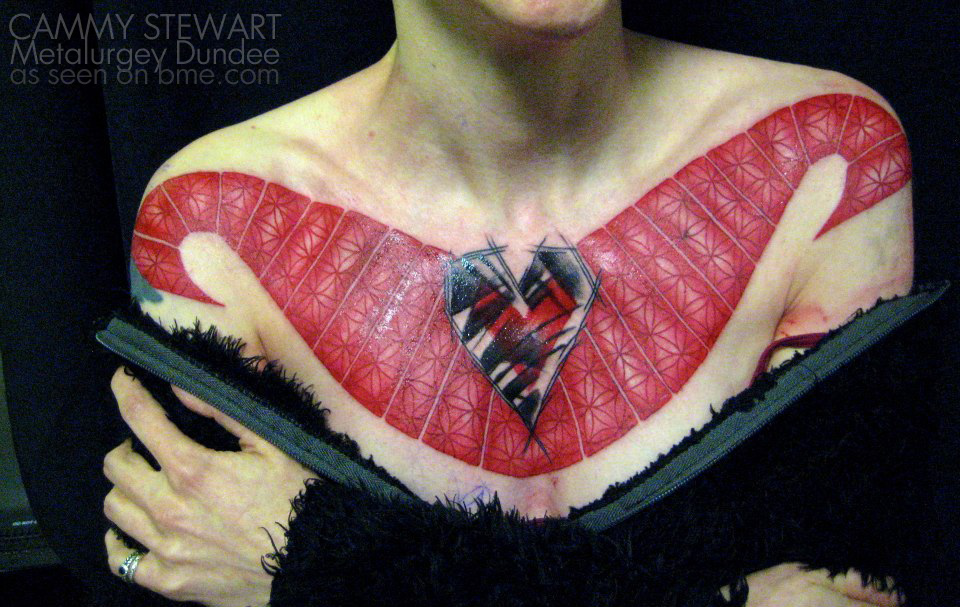
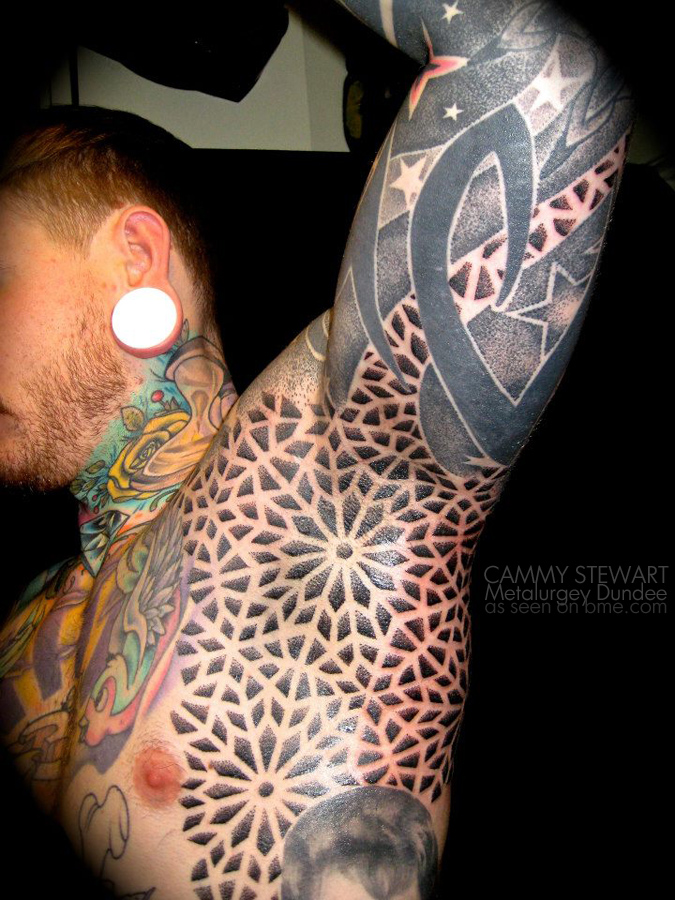
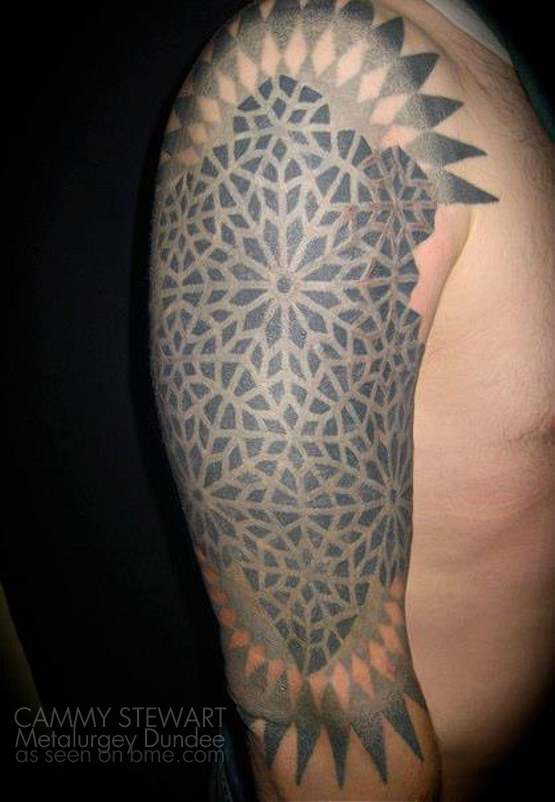
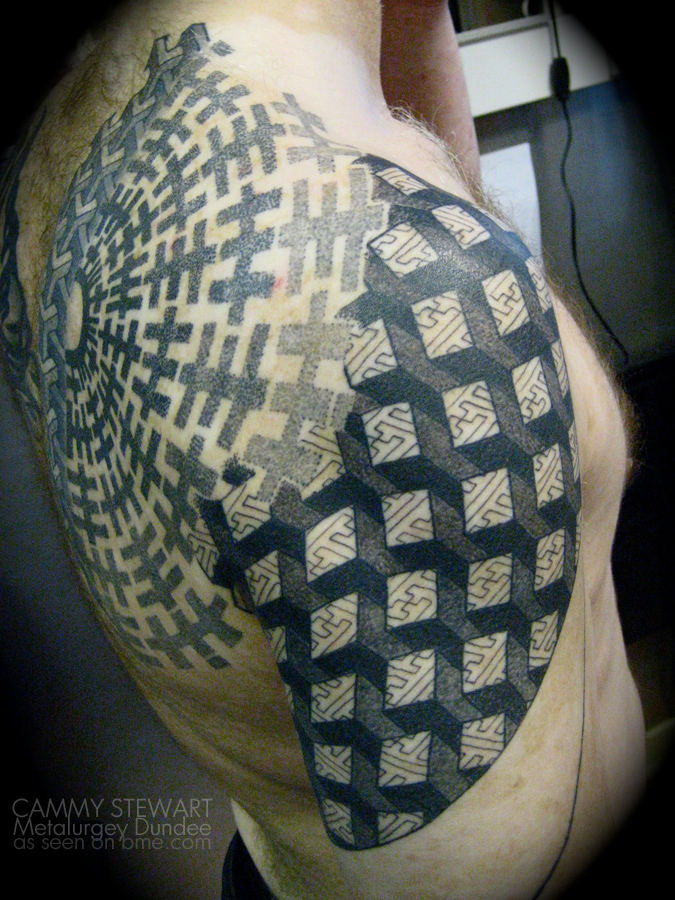
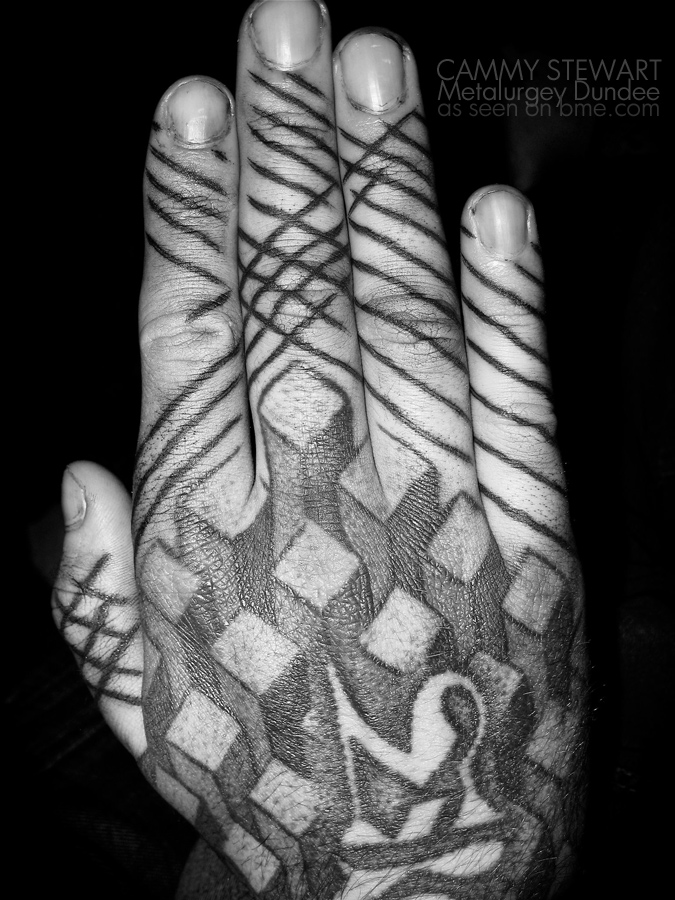
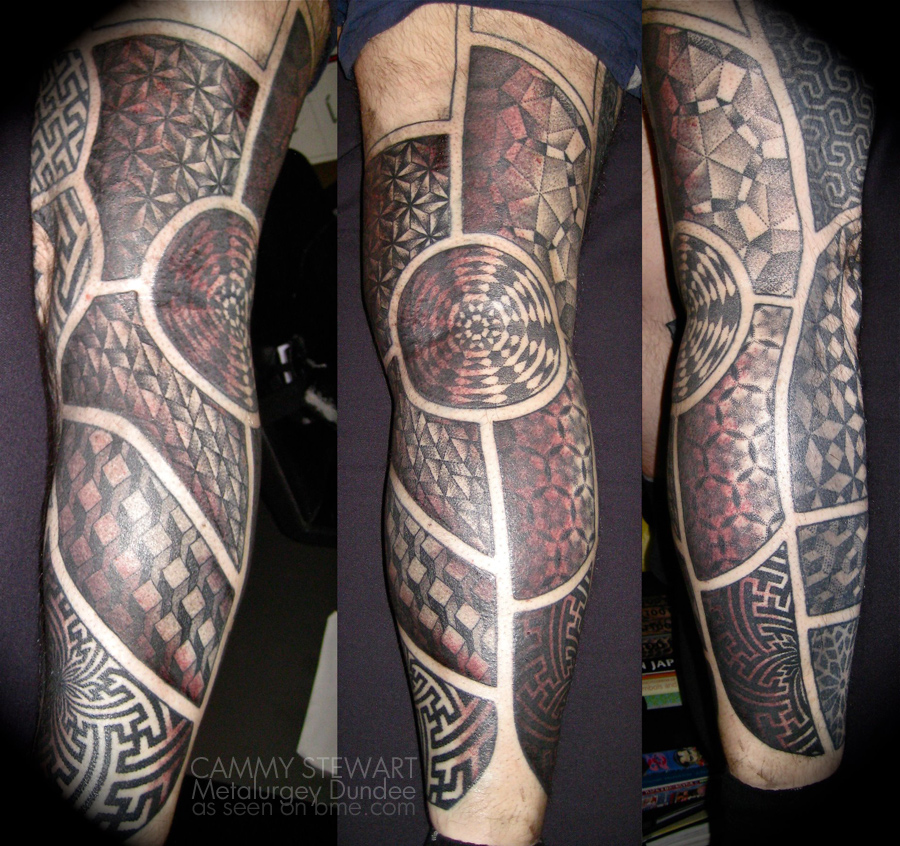
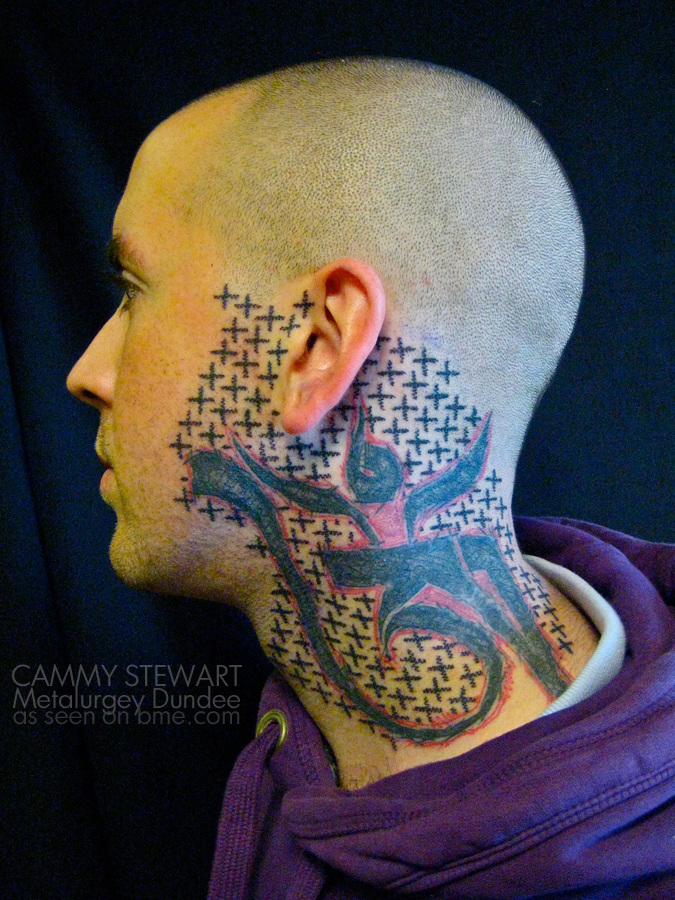
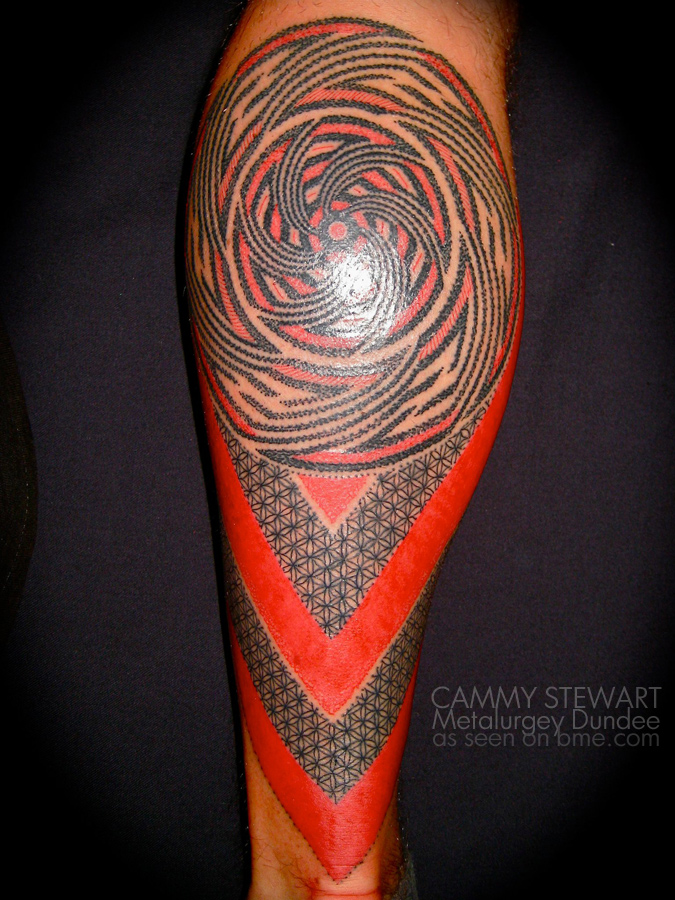
Cammy Stewart, whose work has been featured on ModBlog in the past, is a Dundee, Scotland based tattoo artist who started like most do — self-taught, tattooing anything they could on anyone they could find — but had an epiphany when he met neotribal, blackwork, and sacred geometry tattooing pioneer Xed LeHead at London’s Divine Canvas. He began merging this new style and philosophy of tattooing into his own, and became a part of what began with the idiosyncratic style of a small handful of outsider tattoo artists and has become a full-on art movement. Find Cammy at Metalurgey in Dundee, Scotland, online at facebook/cammystewart or instagram/cammytattoo, or email him at cammytattoo@hotmail.co.uk.


cammy-tattoo-at-work


* How do you create the designs in your tattooing?


I design all pattern work I use for tattooing on Photoshop. Sometimes I draw sections by hand on paper, scan them, and then replicate or manipulate them using the computer until I’m happy with them. Any other drawing or layout for the tattoo is usually drawn directly on to the skin with a selection of pens until it is clean and easy to follow.


* Does the core of the design tend to come from you or from the client?


I like my clients to come in with a rough idea and let me do my own thing with it. The only time I like to have full creative control over a tattoo is when I either know the customer well and they trust me fully, or I get a vibe from them that they are open minded and genuinely don’t mind what I do.


People always say, “do whatever you want,” but I know deep down they don’t really mean it. If the client has existing tattoos that I have to work around or cover up this will also have a massive impact on the final design. I try to use this to my advantage and let it help with the shape, and the shape of the clients body can also influence what kind of design I use or how I place it.


In my opinion the body should be treated as a whole when possible. The un-tattooed space is as important as the tattooed space — how it fits, how it flows, how it becomes a part of the wearer and looks natural on them…


cammy-tattoo-01t cammy-tattoo-02t cammy-tattoo-03t


* Do you have a library of artwork that you do in advance and then look for clients for, or is it all drawn for the specific person?


I design everything for the client, and most of the decisions for the final design are done on the day. I don’t like knowing exactly what I’m going to do in advance as I feel this isn’t really the most creative approach — I like to work in the moment, for my life on that day to influence how I go about coming up with the design. It feels raw, and that’s what I get a buzz from.


I do make patterns and designs and keep them in folders on the computer for possible future use, and I also collect things I find that look interesting from books or online that I feel might be helpful for ideas or for reworking in Photoshop at a later date.


* Maybe a silly question, but why do you use almost exclusively red and black? It seems a common palette for this style in general.


The reason I choose red and black is because it is a striking combination — bold and raw, and it works well on the skin. No other colours have the same power for me. I’m not sure why they are popular as a whole though. I imagine for the same reasons that I’ve just described…


* How do you introduce individuality into designs that by their nature are somewhat repetitive?


Every day is like reinventing the wheel. People see my work and all want similar things done, but I try to persuade them that they should look beyond my previous work and do their own thing to something that will suit them — obviously I have my favourite patterns and motifs but I try not to overuse them.


cammy-tattoo-04t cammy-tattoo-05t cammy-tattoo-06t


* What do you draw influence from as an artist?


I draw influence from everything — my family, my friends, day to day life, emotions from within myself and people I respect within the tattoo industry. I don’t really look at tattoo magazines these days and I try not to look at too much tattoo work online as I don’t want to draw to much from other peoples work. I’d much rather look at books on graphics, street art, and so on to keep my work is as original as possible and not have it be a copy of other artists’ work…


* What would you say to the criticism that geometric tattoos are, while technically advanced, are devoid of a certain artistry?


Art to me is a raw expression of ones self, a tool to communicate with people without language… and mostly something that makes people talk, so whether you like something or hate something, as long as you want to discuss it and it makes you think, then it has much artistry as a portrait or any other kind of tattoo. And really, “what is art?”


* How did you learn and mature as an artist?


It’s been a very long drawn out process. My background was in graffiti art so that obviously has has a big influence on the tattooing I am currently doing. However, when I started tattooing I didn’t have a clue about anything. I am self taught, so the first few years I was just learning the technical aspects through trial and error — I was tattooing whatever came my way really, wanting as much skin as possible to get better.


The biggest turning point for me was meeting my now good friend Xed LeHead from Divine Canvas. As he tattooed my face and head, I remember him saying, “you wear the sacred geometry, so why not take this path and explore it for yourself?”


It just seemed like the right thing to do as I had so much respect and admiration for his work and his take on tattooing and life in general. I felt at home around him and all of the wonderful people working alongside each other at his studio. He shared everything with me –machine knowledge, patterns, tattooing techniques, Photoshop use… the lot! It got me started with this form of art, and gradually, as I got more confident I put my own twist on it and used my own art background to help me develop further… I don’t feel this process will ever stop, and if it does I’ll stop tattooing.


cammy-tattoo-07t cammy-tattoo-08t cammy-tattoo-09t


* Is it frustrating being seen as specializing in a specific style, or does that help you push it further than you could if you were a more “general purpose” tattoo artist?


I much prefer working in only one or two styles. I don’t feel you can be really good at everything — it’s impossible to be great at every style. I’d rather concentrate my brain on one thing and be the best I can be at it than be OK at many styles while never really excelling at any of them. Being an all rounder was never really my thing.


I also feel its easier for people to remember you and your work if you work within only one or two styles — it makes your work instantly recognizable. You could compare it to marketing a brand of anything. When I was still doing other styles, but was already changing from doing a bit of everything to specializing in one style, I felt it a good idea only to display in my portfolio the work I wanted people to come to me for rather than everything I’d done, so that in time people would know and accept that this is what I do.


cammy-tattoo-10t cammy-tattoo-11t cammy-tattoo-12t


* How do you see you style evolving from where it is now?


The work will evolve as the customers evolve. Without people I am nothing. What I’ve been starting to find is, as more people see my work they are keener to give me larger spaces to work on and I have more freedom with design. Everything I do inside and outside tattooing helps me grow and evolve. Also, as equipment gets better it can make tattooing more fluid and allow me to cover more area more efficiently. Long term I would like to work on larger projects rather than small tattoos, but this will only happen when the time is right.


I think geometric/blackwork/abstract work will continue to grow as new artists enter this world and do their own take on it — the possibilities of it are endless with people who are prepared to take risks and push the boundaries of modern tattooing, ignoring all the conventional rules and thinking outside the box…


I just like to tattoo and want my customers to be happy with the final outcome… I want to make images that people remember and that fit the body well.


cammy-tattoo-13t cammy-tattoo-14t cammy-tattoo-15t